Chuck Close & New Realism
In the early 1970’s I came under the influence of those artists now known as the New Realists, or Photo-Realists. At the time I was a student in art school, and there was actually very little training in the traditions of drawing, perspective, color theory and painting.
My teachers were mostly in the abstract expressionist mold, and they constantly discouraged my insistence on drawing from life. “Loosen up! Paint your feelings” was their persistent and obnoxious mantra, so naturally I rebelled against them and went in the opposite direction.
In 1972 I was fortunate to come across New Realism, a book written by art critic and historian, Udo Kultermann. Published by the New York Graphic Society, Kultermann’s book was the very first to be written on the subject of photo realism. In its pages I discovered that a radical new realism was being propounded by young American artists in Los Angeles and New York.
These young upstarts were developing a style in opposition to the art world status quo, which at the time had long been dominated by abstraction, then by pop. That they were doing so without attention from critics, museums or the public, served as a great inspiration to me.
Because of Kultermann’s book I discovered the works of artists like Alfred Leslie and Audrey Flack, who were painting ordinary people and scenes in startlingly photo realistic fashion. I was smitten by the paintings of Joseph Raffael, whose giant sized portraits of Native Americans really struck a cord with me. I was gripped by the exacting and precise photographic realism of painters Robert Bechtle, Richard Estes, Robert Cottingham and Ralph Goings.
In short, the New Realists provided me with an example of how contemporary artists could reclaim and revitalize realism in art. Moreover, their art validated my own, giving me a rationale for my explorations of realism while the rest of the art world seemed to be abandoning the tradition altogether. Though enamored with their work and stance, ultimately I diverged from the path blazed by the New Realists, preferring instead a realism that was more interpretive, emotive, humanistic, and not slavishly copying photographs.
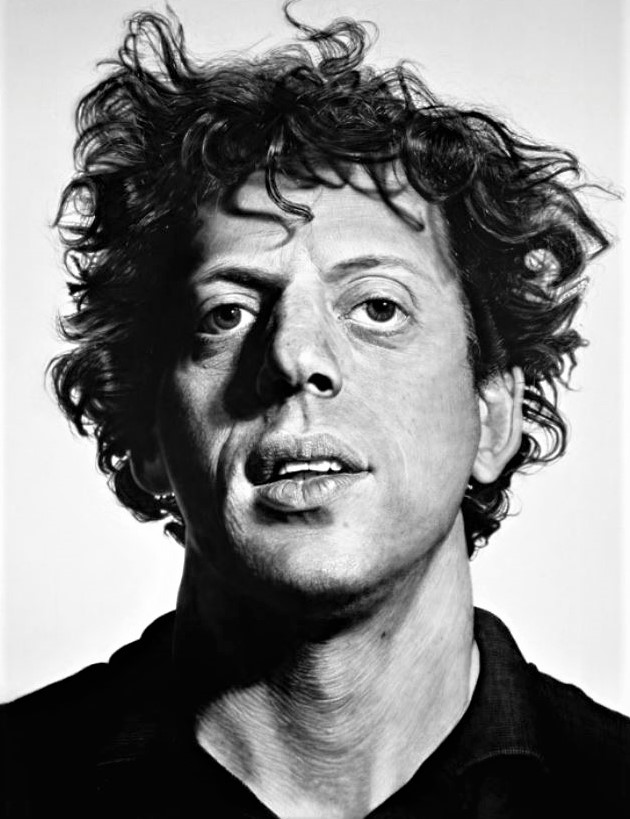
I was particularly interested in Chuck Close and his gigantic photo-like portraits. They captured the modern age with their harsh, unflattering and totally unromantic approach. Close’s unsparing eye showed every blemish on his subject’s face. I was fascinated that Close painted portraits, only from ugly and mundane snapshots. The UK Guardian published an interview with Close that gives insight into his career. In one passage Close tells a story about his student days, where he went drinking with his tutors, the abstract expressionist painters, Jack Tworkov and Philip Guston:
“We’d go to the Old Heidelberg in New Haven and drink strong German beer into the night. One time we got really drunk and they both started crying. There’s Jack on one side, wailing, ‘I ain’t sold a goddamn painting in a year and a half’ and Philip on the other, going, ‘I haven’t sold one in two goddamn years.’ And me in the middle, just devastated. But they reinvented themselves. They came back stronger. That was the most important lesson of all for me.’
Soon after that evening of crying in his beer, Close began painting giant portraits from photographs. The year was 1966. A year later he would move to New York where he was lucky to sell a painting for $1,300 – that is, if he could get his works into a gallery at all. Today his paintings sell for six figures or higher, but more importantly, he never compromised his integrity or vision – which just might be his highest accomplishment.