
| |

Frank Cieciorka: RIP
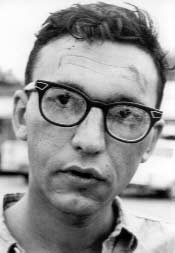
Photo of Frank Cieciorka
Cieciorka as a young Freedom Summer volunteer in Mississippi, 1964. Photo, estate of Frank Cieciorka ©.

On November 24, 2008, artist Frank Cieciorka (che-CHOR-ka) died from emphysema at the age of 69.

Starting in the 1980s he began to be recognized for his watercolor paintings of northern California landscapes, but it would be one of his early graphic art designs that assured him a place in history.

The iconic clenched fist has long been a symbol of the international left, its usage going back at least until 1917. But the symbol was transformed and revitalized in 1965 by Cieciorka, whose rendition of the pictogram struck a cord with a new generation of activists involved in the civil rights and antiwar struggles.

A New Yorker, Cieciorka came to California in 1957 to attend the arts program at San Jose State College. Upon graduation in 1964 he became a volunteer in Freedom Summer, the major civil rights campaign launched in ’64 to help African Americans register to vote in Mississippi.

That same year the Ku Klux Klan kidnapped, tortured, and murdered three Freedom Summer volunteers – James Chaney, Michael Schwerner, and Andrew Goodman. From 1964-65 Cieciorka also served as a field secretary in Mississippi and Arkansas for the Student Nonviolent Coordinating Committee (SNCC – pronounced “snick”), one of the primary civil rights organizations of the day.
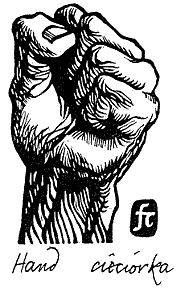
Frank Cieciorka's iconic clenched fist graphic
Hand – Frank Cieciorka. Woodcut. 1965.

Cieciorka returned to the San Francisco Bay area in 1965, and created a woodcut print inspired by his experiences as a civil rights activist in the deep South.

His image, simply titled Hand, made its way onto posters and flyers, but according to the artist, “It wasn’t until we made it into a button and tossed thousands of them into crowds at rallies and demonstrations that it really became popular.”

I wore one of Cieciorka’s buttons as a sixteen-year-old, and I still regard his woodcut print as one of the most striking symbols to have come out of the turbulent 60s.

Similar Posts

  • “Can’t draw or paint, must be an artist.”

    Stuart Jeffries writing for the UK Guardian, conducted a fawning interview with Jeremy Deller, winner of the esteemed Turner Prize. When the reporter asked, “You can’t draw, you can’t paint – how do you get the nerve to call yourself an artist?”, Deller replied, “The thing is – the world has moved on. You’re not writing with quills on parchment….

  • Auctioning Mao: The Party’s Over

    China’s most famous portrait of Chairman Mao Zedong is to be auctioned off by the country’s state-controlled auction house in Beijing. Commissioned in 1950 to celebrate the first anniversary of the People’s Republic of China, Zhang Zhenshi’s oil painting of Mao became a world famous image. The portrait of the communist leader was published in poster form, with untold millions…

  • Andy Warhol Still Dead!

    Cheim & Read Gallery is holding an exhibition of Andy Warhol’s photographs of male nudes. In part, the gallery’s press statement reads: “Warhol made bold commentary on commercialism and post-war capitalism through the manipulated representation and recurrent repetition of his subject. By exploiting the plethora of images and advertisements associated with consumer society and the media, Warhol exposed the inevitable…

  • The Dumbing Down of Culture

    I’ve long understood the connection between visual art and music. To me the musician and artist are kindred spirits, and music has always fanned the flames of my own creativity. Naturally I’ve always been an avid music fan, and since my childhood I’ve enthusiastically collected music recordings. In fact when I was 7 years old in 1961, the very first…

  • Art in Action: El Salvador

    The International Center of Photography in New York is hosting an exhibition of wartime photographs titled: El Salvador: Work of Thirty Photographers. This important exhibit details the bloody US backed counterinsurgency war that ravaged the Central American nation, with the photos documenting the period from 1979 to 1983. Organized more than twenty years ago by photographers Susan Meiselas and Henry Mattison,…