
Depoliticized art much more dramatic?
Some months ago I was reading a Los Angeles art magazine’s review about an artist’s painting that had as its theme the terror attacks of 9/11. The reviewer made the following comment about the artwork: “the artist managed to de-politicize the work and therefore make its impact that much more dramatic.” The reviewer’s assertion reveals a pathological aversion to politics in art (which in fact is a political position).
September 11th represented the most earthshaking political events to have occurred in recent US history, and no matter what approach an artist may take the end result will be a political artwork simply because of the subject. In attempting to “de-politicize” a historic event of such monumental scope, an artist could be courting not artistic success but utter failure.
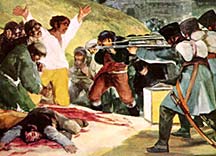
Francisco de Goya’s, The Third of May – 1808, a masterwork depicting the massacre of Spanish civilians at the hands of Napoleon’s occupation troops, was a searing condemnation of the invading French army’s depredations. At the time of its creation it could only have been seen as a highly political work meant to rouse Spanish nationalist and patriotic feelings against a cruel invader. The same can be said of Picasso’s, Guernica, possibly the most famous antiwar image in modern art.
Picasso’s masterwork was a denunciation of the 1937 fascist aerial bombing that obliterated the Basque village of Guernica during the Spanish Civil war. It was an intensely political work meant to mobilize world public opinion against the forces of war and fascism. If Goya and Picasso had “de-politicized” their artworks, would the impact of their paintings have been that “much more dramatic”? As Goya and Picasso so amply proved, grappling with thorny social issues head on and taking unabashedly political positions can result in profoundly humanist and dramatic works of art.
Today’s artists should not shy away from political issues or be afraid to expound ideas of social importance in their works.