|
BACK
TO EXPRESSIONISTS
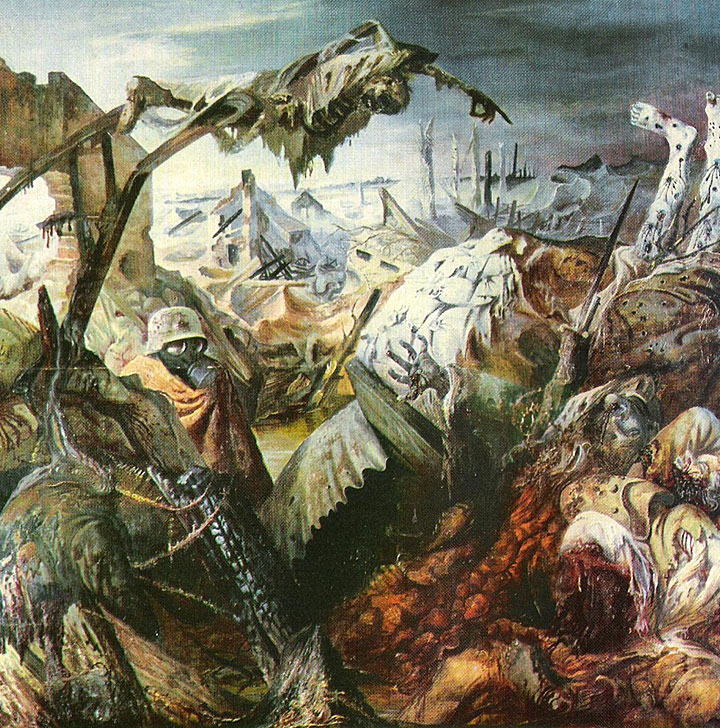
Central
panel of
Triptychon Der Krieg (The War Triptych)
Otto
Dix. Oil and tempera on wood 1929-1932
Based
upon his own war time experiences in the trenches of the
First World War, it was art like this that got Dix in so
much trouble with Germany's right-wing. The central panel
of the triptych shows the devastation and appalling misery
of the battlefield as the artist remembered it. Dix
painted this work using egg tempera and oil on wood. The
painting shows a village shattered and smoldering, trees
blasted into splinters, and everywhere... soldiers, and
parts of soldiers, decomposing in the mud.
A soldier's
bare white legs can be seen sticking out of the putrid morass
in the upper right corner, and a desiccated corpse impaled
on twisted steel bars hovers above the scene of carnage
and despair. Dix created many such artworks based on his
wartime memories, and rarely has the world seen such brutally
honest statements concerning the reality of war.
At the
time Dix painted The War Triptych, the ruling elites
of Germany were attempting to popularize militarism. Fascists
were promising to rebuild Germany with "Blood and Iron",
it was not a time for pacifist images. A year after
Dix created this painting Adolf Hitler came to power. Dix
was accused by the Nazis of creating art that sapped "the
will of the German people to defend themselves."
The artist was immediately fired from his teaching position
at the Dresden Academy of Art and he was prohibited from
exhibiting his works. Instead, the Nazis included the works
of Dix (and other Expressionist artists) in propaganda exhibits
designed to denigrate modern art. Dix was ridiculed in no
less than three such exhibits, the Reflections of Degeneracy
show (Dresden 1933), Art in the Service of Demoralization
(Stuttgart 1933), and the infamous Entartete Kunst
("Degenerate Art") exhibit of Munich 1937.
The
War Triptych was based upon an earlier work, the 1923
painting Der Schützengraben (The Trench), which had
previously been seized by the Nazis and most likely destroyed
by them.
|